Many patients hear the terms plaque and tartar during dental visits but may not always know exactly what they mean. Both refer to types of buildup that can develop on teeth over time. These substances are related to bacteria in the mouth and can affect oral health if they are not managed properly. Understanding the difference between plaque and tartar can help patients see why daily brushing, flossing, and regular dental cleanings are important for maintaining healthy teeth and gums.
What Is Plaque?
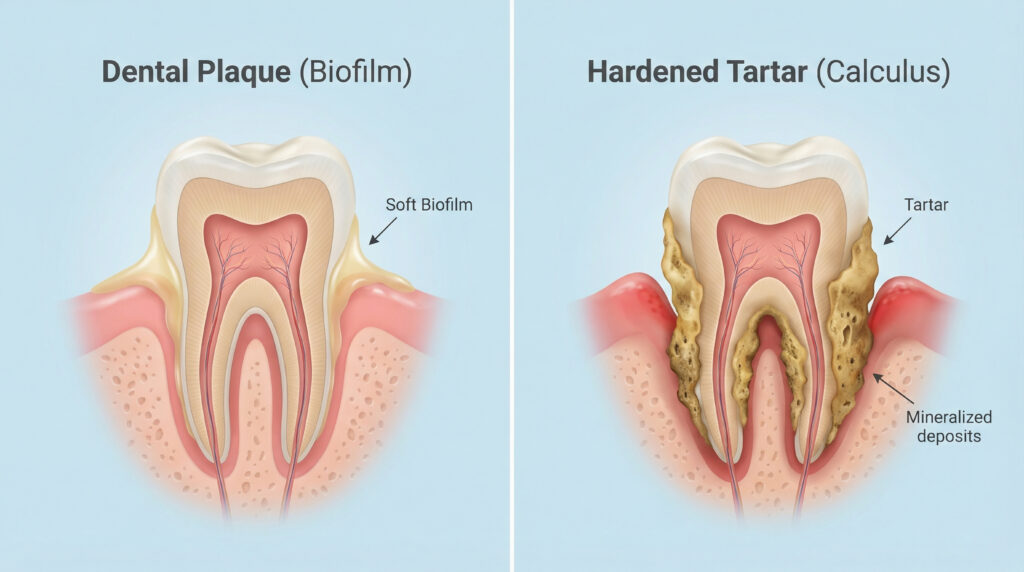
Plaque is a soft, sticky film that forms on teeth every day. It develops when bacteria in the mouth combine with food particles and saliva. This thin layer of buildup can collect on tooth surfaces, especially along the gumline and between teeth where a toothbrush may have difficulty reaching. Because plaque forms continuously, it needs to be removed regularly with good oral hygiene habits. Brushing and flossing help clear away plaque before it has a chance to remain on teeth for long periods of time. If plaque is not removed, it can contribute to common dental concerns such as cavities or irritation of the gums. Maintaining consistent brushing and flossing habits helps keep plaque under control and supports overall oral health.
What Is Tartar?
Tartar forms when plaque is not removed and begins to harden on the surface of the teeth. Minerals in saliva can cause plaque to become firm and attach more strongly to the tooth. Unlike plaque, tartar cannot be removed with brushing or flossing alone. Once it forms, it usually requires a professional dental cleaning to safely remove it. Tartar commonly develops near the gumline and between teeth where plaque tends to collect. It may also appear on the inside surfaces of the lower front teeth. Preventing tartar buildup starts with removing plaque regularly. Daily brushing and flossing help reduce the chances of plaque hardening on the teeth.
Why Professional Cleanings Matter
Brushing and flossing are important for removing plaque, but it can be difficult to clean every area of the mouth thoroughly at home. Small amounts of plaque may remain and eventually harden into tartar over time.
Professional dental cleanings help remove tartar safely and reduce buildup that may affect gum health. During these visits, dental professionals can also examine teeth and gums and identify potential concerns early.
Routine dental cleanings play an important role in maintaining healthy teeth and gums. If you have questions about plaque, tartar, or dental cleanings, the team at Heritage Dental in Carleton Place can help support your oral health through preventive care and routine visits.